
Emotions
Listening to how people talk about emotions and what they do with them, you can discern three different levels, three developmental stages:
- emotions are an obstacle.
- emotions are a value.
- emotions are a tool.
Each level has its own ideas about what emotions are, and what and how to do with them.
1. Emotions as an obstacle
A person’s worth is their mind and logic, and emotions are merely an unwanted burden that educated and developed people do not possess. From here come “men don’t cry,” “strong women,” and “drowning sorrows in drink.” How to deal with emotions? Internally: suppress, repress, not feel, ignore. Externally — don’t talk about emotions, but if someone tries to — they are mocked, scorned, and insulted.
Suppressing emotions is a very primitive way of dealing with emotions — sweeping them under the rug.
As most know, this approach is not sustainable and ecological, it doesn’t really work, so people fall into the second ditch, which brings suppressed emotions into the light.
2. Emotions are a value
A person is an emotional being, a feeling and sensitive being, and emotions are the content and salt of a person’s life. Emotions are to be lived through, experienced, savored, and expressed. Emotions are an indicator of a person’s authenticity. Any talk of managing emotions is impossible, because by that is meant only and exclusively suppressing emotions, and that is harmful. Furthermore — if someone has emotions, then others must stop and allow them to be felt and lived through completely. Emotions must be talked about and emotions are valuable in themselves. At this level, there is often also the view that someone else is responsible for my emotions, and if I experience negative emotions, then it is not I who am at fault. Here we encounter concepts such as “emotional harm,” “emotional violence,” and laws that, for example, punish people for “hurting believers’ feelings.” At this level, people use expressions like “making someone feel.” Here lie the roots of political correctness movements with subsequent (self-)censorship, because from an author’s statements someone might feel emotionally hurt, and then the author will be responsible for the emotional harm done to the reader. At this very level are also found ideas about emotional balance and quotas (don’t rejoice, then you’ll cry) and there’s no joy without sorrow, no happiness without unhappiness.
Of course, I exaggerate somewhat, but — only somewhat. Interestingly, such a position, at least partly, is publicly defended and popularized by some domestic mental health specialists.
As you might guess, the sensible truth lies somewhere between these two ditches, more precisely — above them.
3. Emotions are a signal
This is the third way of looking at emotions — as a message, as a communication.
Similar to how a car’s dashboard has various signals — there are green lights, yellow lights, and red lights, and each signal has its own meaning.
Green means — everything is okay. Yellow — pay attention, do something, if you don’t, then the red will light up. Red — do something urgently, otherwise there will be trouble.
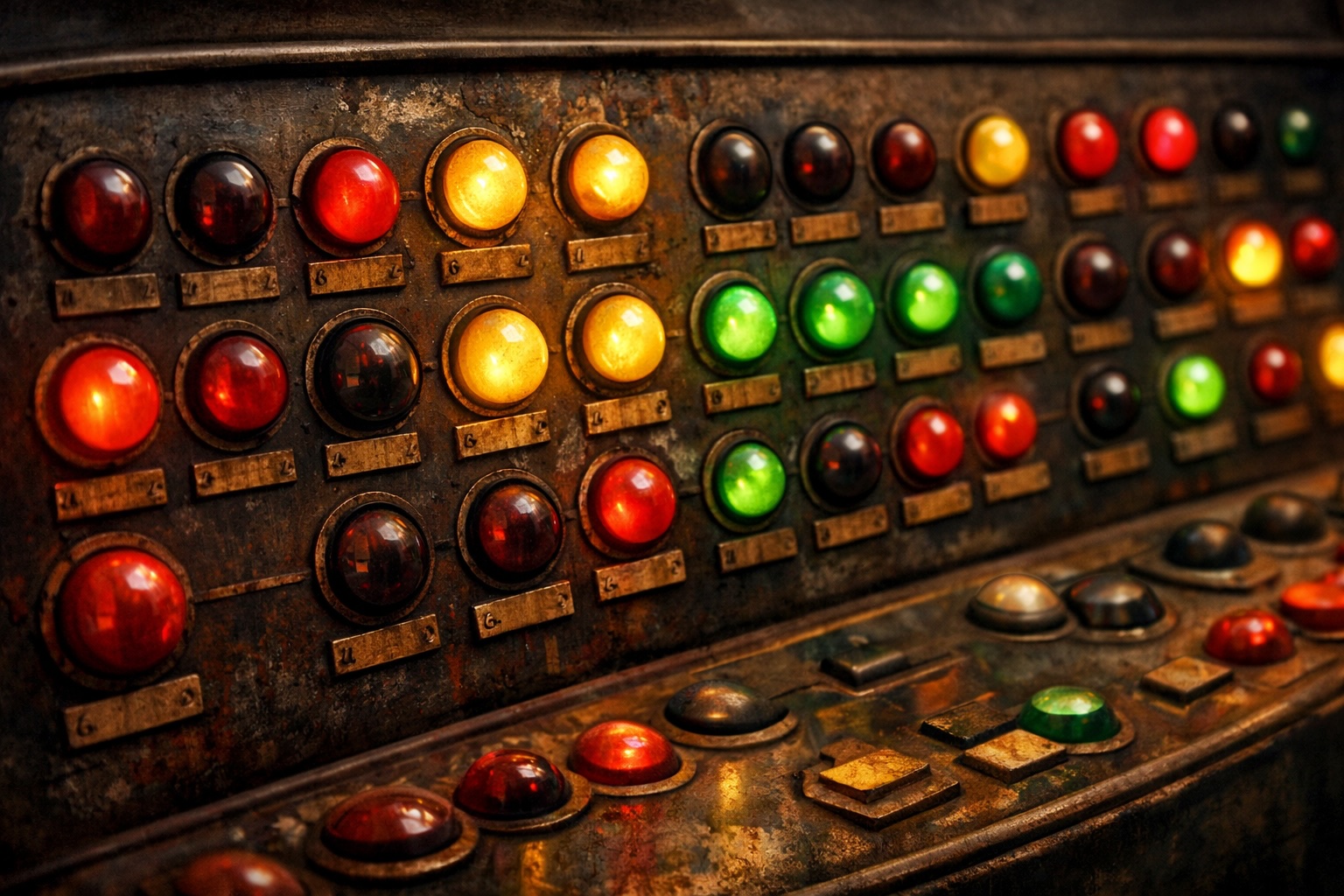
Green lights are desirable. Positive. Seeing green lights on the panel is pleasant.
Yellow and red — undesirable. Negative. When the panel lights up yellow-red, it is unpleasant.
Working with emotions means making such choices that the green lights burn more often and longer, and the yellow and red lights burn less often or not at all.
Emotions give us information about the alignment between our beliefs, ideas, convictions on one hand, and reality on the other.
The basic idea is as follows: no event has inherent meaning. All meanings exist only in people’s minds and we — people — are the ones who give events meaning and significance. The connection to emotions is as follows: if something happens that we assign negative meaning to, we will experience negative emotions. If we assign positive meaning to an event, emotions will be positive. By changing the meaning, emotions also change.
Understanding this, we can regulate, change, and choose our emotions — by changing and choosing the meaning we assign to events.
This position, in my view, is what can be called mature emotional intelligence. It recognizes the importance of emotions (emotions as a signal) without exaggerating it. If a red light is on in a car’s dashboard, it is equally wrong to ignore it and hide it, and to “live through it” and “let it be” — more sensibly, you figure out what this light is signaling and remove its cause — the corresponding negative idea.
Negative ideas
What are these negative ideas I’m talking about?
Here are three (classic) examples — 1. about yourself, 2. about others, and 3. about the world. If you believe in any one of them and interpret events through this idea’s prism, then intense negative emotions are guaranteed for you:
- Whatever I do, I must succeed without mistakes and gain recognition, otherwise I am worthless, inadequate, and useless as a person.
- Others must treat me fairly, kindly — the way I want, otherwise they are bad, terrible people and deserve death.
- The world/life must be easy and give me what I want, otherwise it is terrible, unjust, and unbearable.
In my opinion, each of us to some degree believes in these assumptions, and thus experiences corresponding emotions. But the good news is that by identifying and changing these demands, we can significantly reduce the amount of negative emotions in our lives and, hopefully, be free of them altogether.
Working with emotions
Therefore, working with emotions is as follows:
When I experience some negative emotion:
- Be glad, because I have an opportunity to free myself from some negative assumption.
- Remember that I feel negative because I have interpreted some event in a negative light, and right now I have the opportunity to identify this interpretation.
- Sit down and find what this interpretation is, what idea I believe in. See that it is fundamentally false, too general, unreal, utopian.
- If you can’t find it right away, this question can help: “what idea would I have to believe in to feel the way I feel now.” Then analyze this idea and see how naive, childish, and false it is.
- Seeing this, it will be easy to replace the original idea with another. The indicator of a successful process is a change in emotions (that light on the panel no longer burns).
If you can’t manage it alone, you can also go through this process in conversation with someone.
Now: How would you choose to feel, knowing that your emotions are your choice?