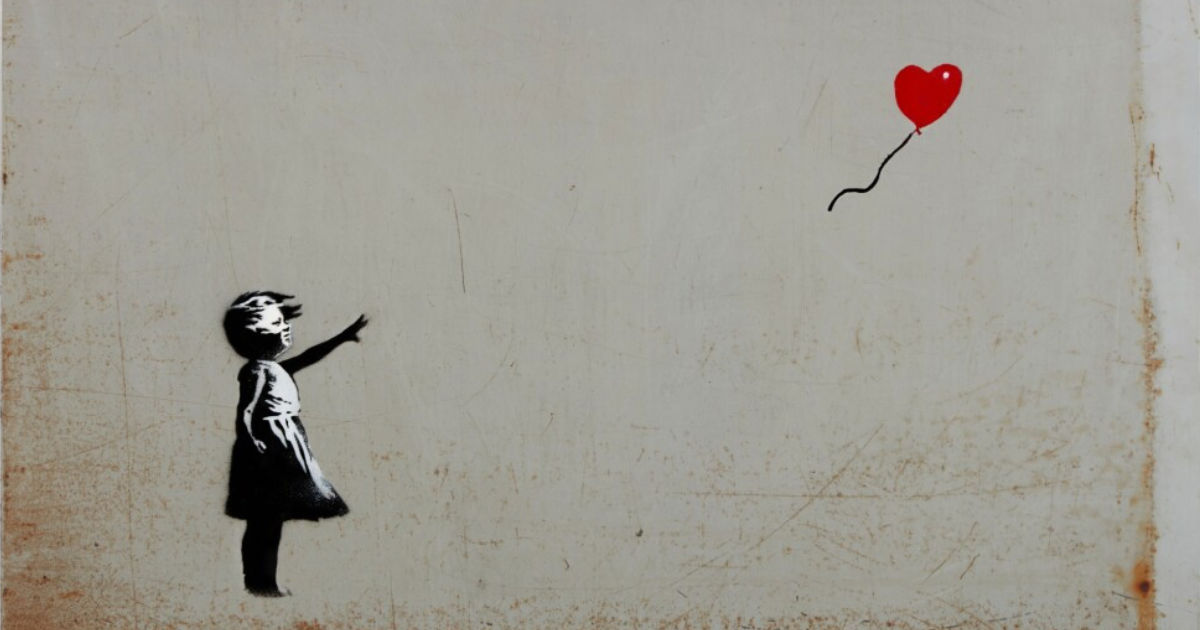
Letting Go
Let go! — the phrase is said so often, and heard just as often. But how? How does one actually do it?
Our mind is used to clinging to thoughts, memories, emotions. To people, situations, ideas. Sometimes a song or a poem gets stuck in the mind — or a word. How do you let those go?
It is not simple. Not at all. And yet the paradox is that when someone finally manages to let go and is asked — how did you pull that off? — they can’t explain anything beyond “I just let go.”
I can share a few of my own observations, and the way I practice letting go myself.
Every day of our lives we carry hundreds of small plans — about how things should go. How long until the bus arrives, how quickly I’ll get where I’m going, how the lunch I ordered will taste, which people I’ll meet where, how I’ll spend the evening. We are constantly making plans — right now, for instance, I have a plan/idea in my head of what this article will be like when it’s finished. You have a hope/wish (a plan) of getting some answers — since you’re reading it.
And every day there are situations where these small plans don’t work out the way we imagined. Things go slightly differently, completely differently, or don’t happen at all. And that is a good moment to “practice letting go.”
How? Usually, when life doesn’t follow my plan, I get angry, argue, take offence — or start stressing, worrying, frantically searching for solutions, trying to change what’s happening. That’s what we normally do. But while learning to let go, we can do something slightly different.
First, you can notice — aha, it didn’t go the way I had imagined. Then you can notice how you feel about it — indignant, offended, angry. (This is why it’s important to start with small everyday things.) And once I’ve noticed how I feel, I can ask myself — what exactly am I feeling this about? Most likely the answer will be — because reality doesn’t match my plans. Because I had imagined it would be different.
At this point it becomes possible to see that what has happened has already happened. It can no longer be changed or undone, because it is already the past — maybe only a second or a minute old, but the past. It cannot be altered. What I can do is accept what has happened, and let go of my past plans about how it should have gone. To accept means to say to oneself: “it is so.”
A couple of examples:
The omelette

Last summer my girlfriend and I were staying at a seaside campsite. In the morning we had breakfast at the campsite café. We ordered two identical omelettes. When they were ready and I picked up both plates, I discovered that one of them had two slices of toasted bread, and the other had none.
I went to the waiters and told them we were missing two pieces of toast. Apologies, we’ll prepare them right away and bring them over — they replied.
I returned to our table. Naturally, I had given the omelette with the toast to my companion. And then I started grumbling. The inner dialogue gained momentum — what is going on, such careless service, how hard can it be to get two portions right at once, my omelette is getting cold, what’s taking them so long, they’ve probably run out of bread and are running to the shop, what am I supposed to do now — eat without toast or eat a cold omelette, for crying out loud, and so on. Of course I was angry, offended, irritable. But then, at some point, I noticed that I was irritable, angry, offended. And I realised there was nothing I could do — that is, everything I could do, I had already done (I had asked the waiters for the toast). I also realised that my grumbling was itself preventing me from enjoying the delicious omelette, the beautiful morning and my lovely companion. And in that moment I let go of my plan about the toast and turned to what was there — on my plate, beside me at the table, and all around. The irony of fate, of course, was that the moment I let go of my grumbling, the waitress brought the toast — warm and fresh. Since I was no longer expecting it (having let go of the waiting), it came as a pleasant surprise — a gift, a bonus.
There is one more telling detail in this story. The plan about an omelette with toast was born only at the moment I saw that one omelette came with toast. Before that — on the menu — there had been just an omelette.
Tea in a thermos
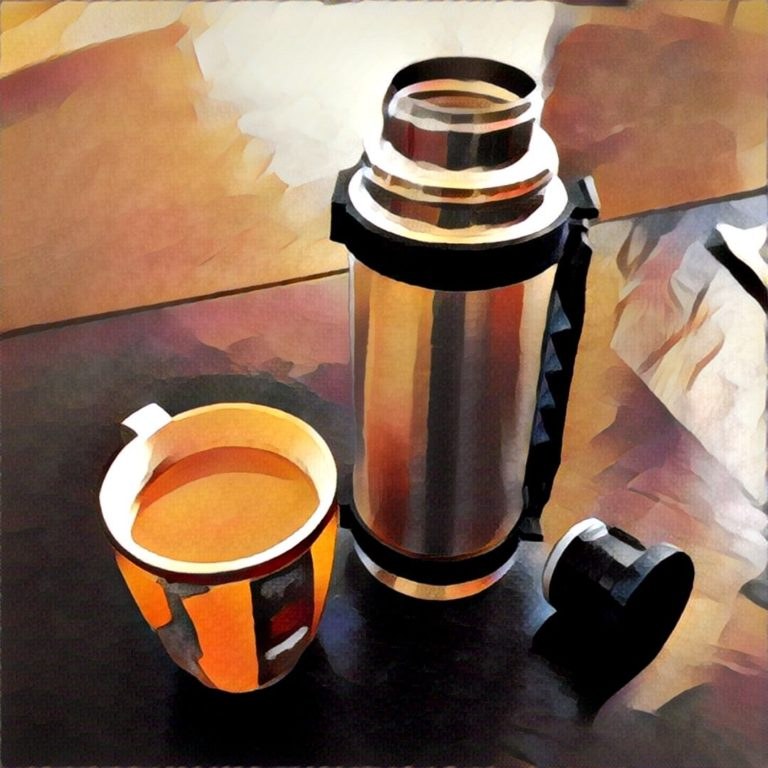
The other story — one working day I had made myself some tea (chai massala) — enough to drink one cup right away and pour the rest into a thermos, to drink after the class, once everyone had left.
The class ended happily, people went home. When I walked over to the thermos, I saw that I had forgotten to screw the lid on. The tea was in there, but — it had gone lukewarm, having stood open for quite a while.
Of course, the first reaction was — damn it! (or a slightly stronger word). But I noticed it almost instantly (~2 seconds) and said — well, all right. It is so. Nothing can be done here (about what has already happened — what I failed to do while making the tea). As for what comes next — I can drink cooler tea, I can reheat it, I can pour it out and make fresh. As it turned out, the tea wasn’t that cool at all, and was at a very drinkable temperature.
So — in the simplest of things, whenever life doesn’t go according to our plans, we can practice letting go. With time it becomes easier and easier. But practice — like any practice — is nothing other than repetition.
Again and again.
p.s. After writing this, I remembered that I once asked the monk Tan Hubert from Thailand how to let go. His answer was precise and brilliant: “Start by letting go of your desire to know the answer to this question.”
and p.p.s. If you want to learn letting go more seriously, here is an hour-long video well worth watching:
Four ways of letting go.
Topics