The Story of 10 Billion
Source: I first read it here (snob.ru); the article was later republished widely. Out of curiosity I also tracked down the scientific version — confirmation of Kapitsa’s research. This is not a full translation but my retelling, with translated quotes.
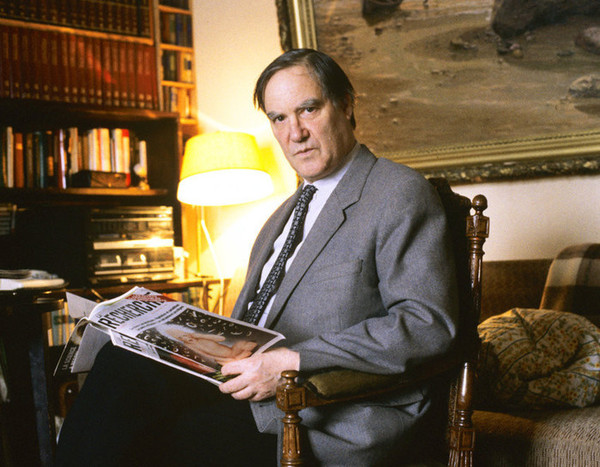
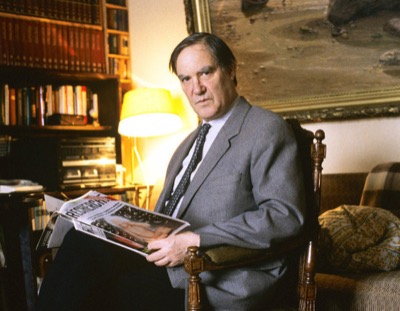
Sergei Kapitsa (1928–2012) was a physicist, son of Nobel laureate Pyotr Kapitsa, and from 1973 the host of the popular science programme «Очевидное — невероятное» (“The Obvious and the Improbable”). This is his last article — on the question he devoted the final twenty years of his life to: how many people live on Earth, why exactly that many, and what is happening to that number now.
The problem least worked on
In the nineties, after the collapse of science in Russia, Kapitsa spent a year in Cambridge — the city where he was born and where his father had once worked. There, in his own words, “through an entirely inexplicable confluence of circumstances,” he stumbled onto the problem of population growth. In his view it is the central global problem — and at the same time the one least worked on. Demography back then moved from the smaller to the larger: there was a demography of Moscow, a demography of England, a demography of China. Looking at humanity as a whole simply wasn’t done; Kapitsa draws a comparison — just as one doesn’t talk about sex in polite company, one didn’t talk about the demography of all humankind in good scientific company.
There were predecessors, though. Euler wrote down the basic equations of demography as early as the eighteenth century. Malthus — a theologian with serious mathematical training — built a fairly rigorous theory, but on false premises: that the number of people grows exponentially, and that growth is limited by resources such as food. That is how most living things grow — exponentially, until the resources run out. “Even microbes in a nutrient broth grow that way. But the thing is, we are not microbes.”
Humans don’t fit the biological pattern
To see how far humans stand from the rest of living nature, there is no need to climb inside our heads — counting is enough. Nature follows a rule: the larger the body mass, the fewer the individuals. At around a hundred kilograms there should be a few hundred thousand of us — roughly as many as there are wolves or wild boar in Russia. In the Palaeolithic that was indeed so: palaeoanthropologists estimate the human population of the time at about a hundred thousand. But since then humans have exceeded their “biological norm” a hundred thousand times over — about a hundred million at the time of Christ, two billion in Kapitsa’s school years, seven billion when the article was written.
What’s more, this growth is not exponential, as Malthus thought, but hyperbolic — barely perceptible at first, explosive at the end. That implies something essential: the rate of growth is proportional not to the number of people but to the square of that number. To a physicist this is a familiar picture — a second-order reaction, where the speed of the process is set not by the number of participants but by the number of interactions between them. “The square of the number of people is the number of connections between them — a measure of the complexity of the system called ‘humanity.’” The mechanism that sets us apart from other species is the exchange of knowledge: we pass it on vertically, to our children, and horizontally, in schools and universities. That is why what we have is not mere reproduction but progress.
From here follows Kapitsa’s attitude towards resource-depletion scares — he considers them the fruit of undisciplined thinking. An example from the article: a couple of decades earlier, people seriously argued that Bollywood’s film output would soon swallow the world’s silver reserves in film-stock emulsion; then magnetic recording was invented, which needs no silver at all. Food, too, is sufficient — Argentina, a third smaller than India in area, could at a stretch feed the entire world. The problem is not quantity but distribution; Kapitsa repeats the old joke that under socialism even the Sahara would run short of sand.
The most striking thing about the hyperbolic law is its resilience. Plague epidemics in medieval Europe carried off up to three quarters of the population in some lands — within a century the curve was back on its old trajectory. The model puts the combined losses of the two world wars at around 250 million people, three times higher than historians’ estimates — the deviation from equilibrium was eight percent, and within a few decades it too had evened out.
Why historical periods keep getting shorter
Many schoolchildren are puzzled by the way historical periods contract over time: the Palaeolithic lasted about a million years, the Middle Ages a thousand, modern history mere centuries. Kapitsa’s model gives this old observation an unexpectedly simple explanation: history runs not on astronomical time but on the system’s own time, and it is measured not in Earth’s revolutions around the Sun but in human lives lived. Counted that way, the Palaeolithic (a million years, a hundred thousand people) contains about ten billion lives. The same number — the millennium of the Middle Ages. And the same again — the hundred and twenty-five years of modern history. Each historical period turns out to be equal not in duration but in content: around ten billion lives lived.
Now ten billion lives pass in half a century — the historical epoch has shrunk to a single generation. Kapitsa gives an everyday example: the teenagers of his day no longer understood what “phone booth” Alla Pugacheva had been singing about thirty years earlier. And he offers the perspective I find most valuable in the whole article: the laments about the broken link between generations and the dying of traditions may describe not a collapse but the natural consequence of history accelerating. “If each generation lives in its own epoch, the heritage of previous epochs may simply be of no use to it.”
The transition we are in the middle of
History cannot compress without limit — the boundary is the length of a generation, about forty-five years. So the hyperbolic law must change, and it already is: by the formula there should be ten billion of us today, but we are seven. Around 1995 humanity passed through the maximum rate of growth — about eighty million births a year — and since then growth has been shrinking. This is the demographic transition: from continuous growth to stabilisation at a level not exceeding ten billion.
Many are drawn to seeing catastrophe in this break. Kapitsa answers: “The catastrophe here is in people’s minds rather than in reality.” His comparison is a phase transition — a pot on the fire where for a long time nothing happens, and then everything boils at once. The most dangerous stretch is the very middle of the transition, the chaotic zone between two calm regimes, and that is exactly where we are. He reads the financial crisis, the moral crisis, the general unsettledness of life as a state of stress tied to the suddenness of the transition: our morality and institutions were adapted to a growth regime that had been constant throughout history and is now changing within a few generations. The whole transition, by the model, takes less than a hundred years — for the pioneers, France and Sweden, stabilisation took a century and a half; for Costa Rica and Sri Lanka, only a few decades. The later a country enters the transition, the more sharply it passes through it.
The article ends without recipes — Kapitsa declines the prophet’s role outright: “I am not a prophet, I am only learning.” He calls himself an optimist, though with the caveat that pessimism has always been the more fashionable current. The closing sentences stay in the memory for their restraint: “I cannot promise you that the worst is already behind us. But ‘the worst’ is a subjective notion.”
Topics